


Unlock the Secrets of Fendi’s Iconic Brand Identity
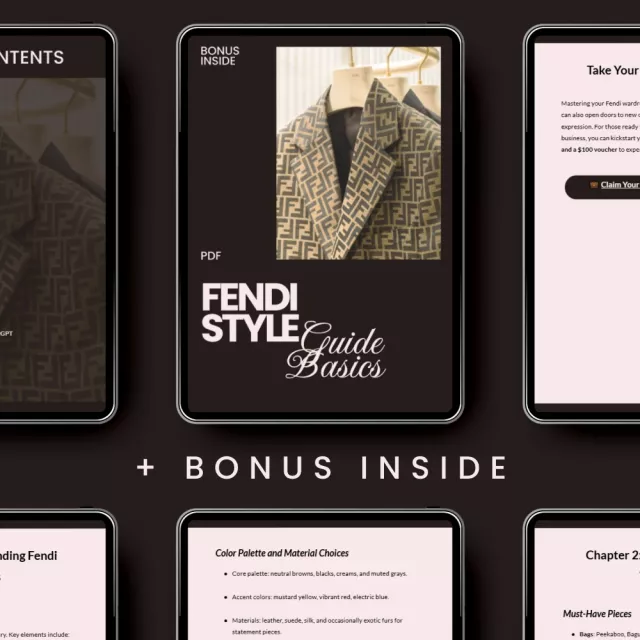
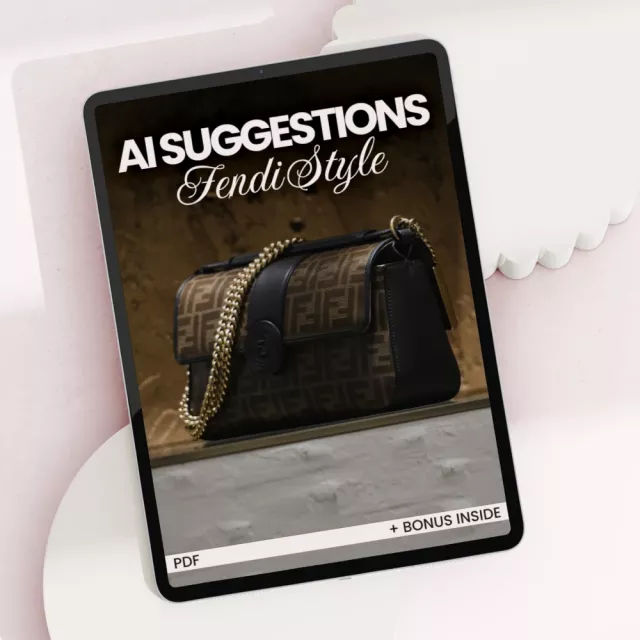
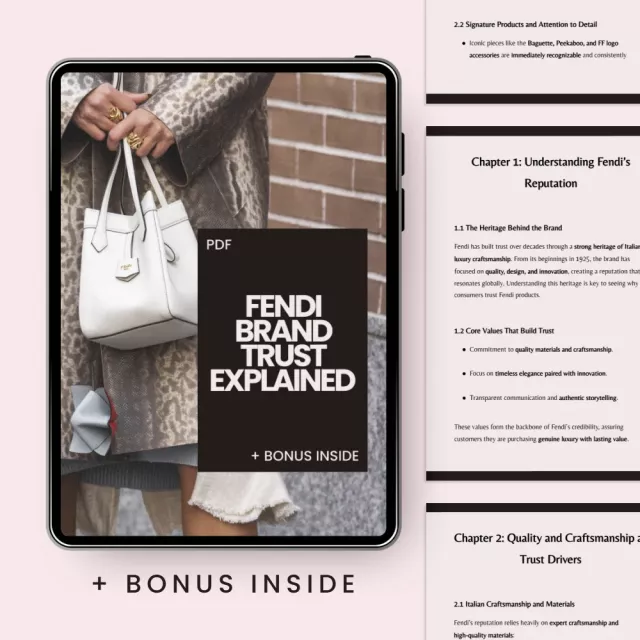
Discover the story behind one of the most iconic luxury fashion brands in the world with our exclusive eBook, Decoding Fendi’s Brand Identity. This detailed guide dives deep into the essence of Fendi, unpacking the legacy, craftsmanship, and visual language that make the brand instantly recognizable. Whether you’re a brand strategist, a marketer, or simply a fashion enthusiast, this eBook will provide you with the tools to understand and apply Fendi’s branding strategies to your own work or business.
What’s Inside the Guide?
- The Essence of Fendi – Understand what makes Fendi truly unique in the world of high fashion.
- What Makes Fendi Fendi – Explore the brand’s core elements and how they’ve stayed true to their roots.
- A Legacy of Craftsmanship – Learn about the meticulous craftsmanship behind every Fendi creation.
- Signature Style and Aesthetic – Uncover the signature visual language, including logos, color palette, and typography choices.
- Iconic Campaigns & Collaborations – Dive into the most celebrated ad campaigns and collaborations with celebrities.
- Common Brand Pitfalls – Analyze the risks and challenges Fendi has navigated to maintain its image.
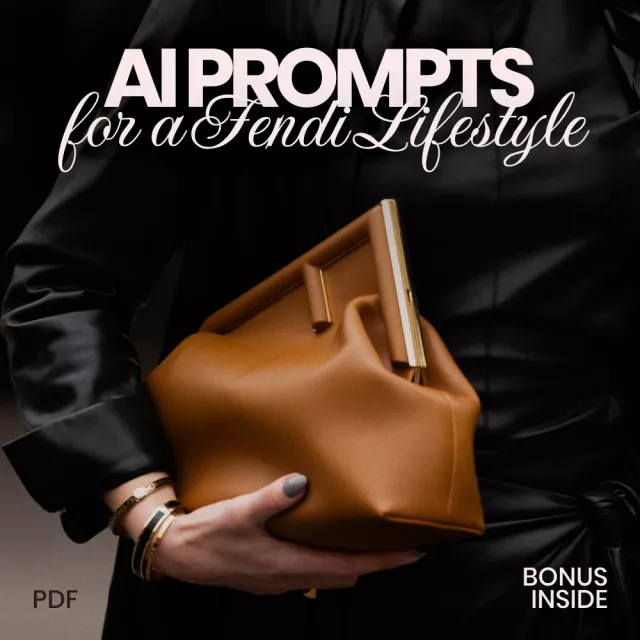
- AI-Powered Creativity for Brand Strategy – Learn how AI tools like MidJourney and ChatGPT can help you craft brand strategies and visuals.
- Exercises for Understanding Identity – Practical exercises to apply Fendi’s branding lessons to your own brand.
Who Is This Guide For?
This eBook is designed for brand strategists, marketers, designers, and entrepreneurs looking to understand and replicate the success of luxury fashion brands like Fendi. It’s also perfect for anyone interested in the art of brand storytelling and identity development. Whether you’re launching your own brand or refining an existing one, this guide provides invaluable insights and practical tools to help you stand out.
Why Choose This Guide?
What sets Decoding Fendi’s Brand Identity apart from other similar resources is its depth of analysis and practical approach. Not only will you gain a comprehensive understanding of the Fendi brand, but you will also learn actionable strategies that you can apply to your own brand journey. This isn’t just a theoretical guide—it’s filled with real-world case studies, brand strategy tips, and even AI-powered tools to help you craft compelling brand visuals and copy.
Practical Benefits of This eBook
- Master Brand Strategy – Learn the key elements that shape a luxury brand identity.
- Enhance Your Visual Aesthetic – Discover how Fendi’s color palette, typography, and logos contribute to its success.
- Build Emotional Connections – Understand how Fendi speaks to its audience and how you can do the same.
- Stay Ahead of the Curve – Use AI tools to create cutting-edge brand strategies and visuals.
Ready to Unlock Fendi’s Brand Secrets?
Don’t miss out on the chance to dive into the world of Fendi and learn from one of the most successful luxury brands in history. Download Decoding Fendi’s Brand Identity today and start building a brand that resonates with your audience. Whether you’re new to branding or a seasoned professional, this guide is your ultimate resource for mastering brand identity.
Download now and take the first step toward mastering Fendi’s iconic brand identity!
SHIPPING
We are proud to offer international shipping services that currently operate in over 200 countries and islands world wide. Nothing means more to us than bringing our customers great value and service. We will continue to grow to meet the needs of all our customers, delivering a service beyond all expectation anywhere in the world.
Do you ship worldwide?
Yes. We provide free shipping to over 200 countries around the world. However, there are some locations we are unable to ship to. If you happen to be located in one of those countries we will contact you.
What about customs?
We are not responsible for any custom fees once the items have been shipped. By purchasing our products, you consent that one or more packages may be shipped to you and may get custom fees when they arrive to your country.
How long does shipping take?
Shipping time varies by location. These are our estimates:| Location | *Estimated Shipping Time |
|---|---|
| United States | 5-20 Business days |
| Canada, Europe | 5-20 Business days |
| Australia, New Zealand | 5-20 Business days |
| Central & South America | 5-25 Business days |
| Asia | 5-20 Business days |
| Africa | 5-25 Business days |
Do you provide tracking information?
Yes, you will receive an email once your order ships that contains your tracking information. If you haven’t received tracking info within 5 days, please contact us.
My tracking says “no information available at the moment”.
For some shipping companies, it takes 2-5 business days for the tracking information to update on the system. If your order was placed more than 5 business days ago and there is still no information on your tracking number, please contact us.
Will my items be sent in one package?
For logistical reasons, items in the same purchase will sometimes be sent in separate packages, even if you've specified combined shipping.
If you have any other questions, please contact us and we will do our best to help you out.
RETURNS
Order cancellation
All orders can be cancelled until they are shipped. If your order has been paid and you need to make a change or cancel an order, you must contact us within 12 hours. Once the packaging and shipping process has started, it can no longer be cancelled.
Refunds
Your satisfaction is our #1 priority. Therefore, you can request a refund or reshipment for ordered products if:
- If you did not receive the product within the guaranteed time (45 days not including 1-3 day processing) you can request a refund or a reshipment.
- If you received the wrong item you can request a refund or a reshipment.
- If you do not want the product you’ve received you may request a refund but you must return the item at your expense and the item must be unused.
We do not issue the refund if:
- Your order did not arrive due to factors within your control (i.e. providing the wrong shipping address)
- Your order did not arrive due to exceptional circumstances outside the control of succella.com (i.e. not cleared by customs, delayed by a natural disaster).
- Other exceptional circumstances outside the control of succella.com.
*You can submit refund requests within 15 days after the guaranteed period for delivery (45 days) has expired. You can do it by sending a message on Contact Us page
If you are approved for a refund, then your refund will be processed, and a credit will automatically be applied to your credit card or original method of payment, within 14 days.
Exchanges
If for any reason you would like to exchange your product, perhaps for a different size in clothing, you must contact us first and we will guide you through the steps.
Please do not send your purchase back to us unless we authorise you to do so.
Order cancellation
All orders can be cancelled until they are shipped. If your order has been paid and you need to make a change or cancel an order, you must contact us within 12 hours. Once the packaging and shipping process has started, it can no longer be cancelled.
Refunds
Your satisfaction is our #1 priority. Therefore, you can request a refund or reshipment for ordered products if:
- If you did not receive the product within the guaranteed time( 45 days not including 2-5 day processing) you can request a refund or a reshipment.
- If you received the wrong item you can request a refund or a reshipment.
- If you do not want the product you’ve received you may request a refund but you must return the item at your expense and the item must be unused.
We do not issue the refund if:
- Your order did not arrive due to factors within your control (i.e. providing the wrong shipping address)
- Your order did not arrive due to exceptional circumstances outside the control of succella.com (i.e. not cleared by customs, delayed by a natural disaster).
- Other exceptional circumstances outside the control of https://succella.com
*You can submit refund requests within 15 days after the guaranteed period for delivery (45 days) has expired. You can do it by sending a message on Contact Us page
If you are approved for a refund, then your refund will be processed, and a credit will automatically be applied to your credit card or original method of payment, within 14 days.
Exchanges
If for any reason you would like to exchange your product, perhaps for a different size in clothing. You must contact us first and we will guide you through the steps.
Please do not send your purchase back to us unless we authorise you to do so.
Customer Reviews
Write a Review
We Think You’ll Love
Top picks just for you













The case studies table showing what worked versus what didn't is the kind of clarity I look for in brand analysis. No hedging, just direct lessons.
Finally a brand breakdown that treats fashion as a strategic discipline.
The emotional connections section reframed how I think about customer loyalty entirely. Storytelling through iconic products rather than just advertising them — that distinction alone made this worth reading. The Baguette bag example landed perfectly.
I run a small accessories label and the brand pitfalls section saved me from a collaboration I was about to sign that would have confused my entire audience. The overextension warnings are sharp and specific enough to apply immediately to any brand, not just Fendi.
The typography analysis was an unexpected highlight.
Useful overview but the visual language section felt surface-level for anyone who's studied brand identity formally. The color palette breakdown could have gone deeper into seasonal strategy. The collaboration case studies make up for it though.
Heritage rooted in Rome since 1925 — and still this relevant. The guide captures why.
I teach a graduate course on luxury brand management and I've added sections of this to my supplementary reading list. The way it connects Fendi's craftsmanship legacy to modern brand voice across different platforms gives students a tangible example of strategic consistency. The pitfalls chapter is especially valuable because most brand guides only celebrate wins — this one shows how even prestigious houses risk dilution through misaligned partnerships or excessive product launches. The exercises at the end pushed my students to apply insights instead of just absorbing them. I also used the AI moodboard suggestions as a class activity and the results were surprisingly refined. One of the more complete brand identity breakdowns I've encountered in a free resource.
The Fendi x Fila case study is a masterclass in strategic collaboration.
The brand personality section articulating confidence without arrogance as a core trait clarified something I'd felt about the brand but couldn't name. That framework translates directly to how I position my own work.
Solid content but the AI chapter felt bolted on rather than integrated into the brand analysis. The moodboard tool suggestions are fine but generic — they'd apply to literally any brand guide. The first five chapters are where the real value lives.
The monogram usage analysis — subtle embossing versus bold runway prints — taught me more about brand flexibility than most textbooks.
Read it twice in one sitting 🤍
The overextension risks section is brutally honest about how even top-tier brands self-sabotage. The point about social media overexposure reducing perceived prestige hit close to home — I've been posting too much for my own brand and this made me pull back strategically.
Luxury that's accessible in imagination if not in price — that single line captures an entire positioning strategy.
I picked this up thinking it would be another surface-level fashion appreciation post. Instead it fundamentally changed how I approach brand strategy for my agency's clients. The distinction between Fendi's social media voice — playful, sometimes humorous — and its runway campaigns being sophisticated and aspirational showed me how a single brand can modulate tone without losing identity. I used the exercises from the final section to audit three of our client brands last month and found gaps we'd been ignoring for quarters. The misaligned collaborations framework also gave us a concrete rubric for evaluating partnership proposals. The case study comparing Fendi x Fila's success against low-end product tie-in failures is something I now reference in every client pitch. Forwarded this to my entire team.
The voice and tone breakdown across platforms is gold for anyone in content strategy.
Appreciated the collaboration analysis but wanted more depth on what makes endorsements resonate versus fall flat. The celebrity examples are listed but not deeply examined. The pitfalls section partially compensates for that gap.
⭐🔥👏✨
Structured vs. fluid, minimalist vs. bold — the aesthetic tensions this guide identifies are exactly what makes Fendi hard to copy and easy to recognize. That framing alone is worth studying.
The brand framework exercises actually made me do the work.
I spent two years trying to articulate my jewelry brand's identity and getting nowhere. This guide gave me a template through Fendi's example. The section on defining heritage, values, and visual identity pushed me to write my own brand framework over a long weekend. The comparison exercise — matching Fendi against another luxury house to spot differences in tone and audience — revealed exactly where my positioning was muddled. I also started using Coolors.co after reading the moodboard tools section and landed on a palette that finally feels right.
Clean analysis with practical takeaways at every turn.
Good framework but some sections feel more like bullet-pointed summaries than true analysis. The brand personality chapter could benefit from more examples of how Fendi's messaging has evolved over time rather than a static snapshot. Still, the pitfalls chapter is exceptionally well done.
The Fendi x Skims case study connecting luxury with inclusivity and body positivity is the smartest collaboration example I've read this year.