



Unlock the Mysteries Behind Prada’s Iconic Logo
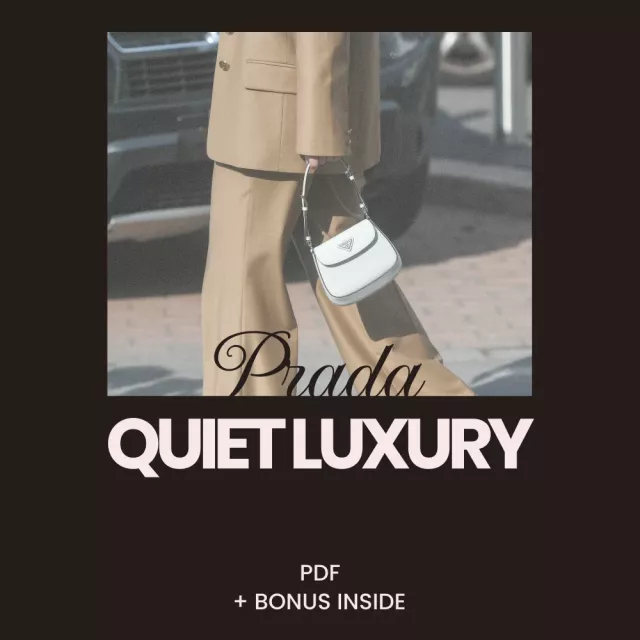
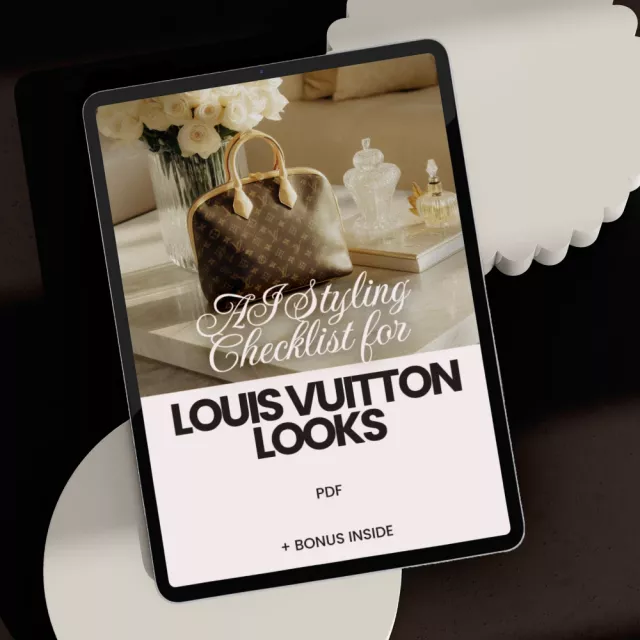
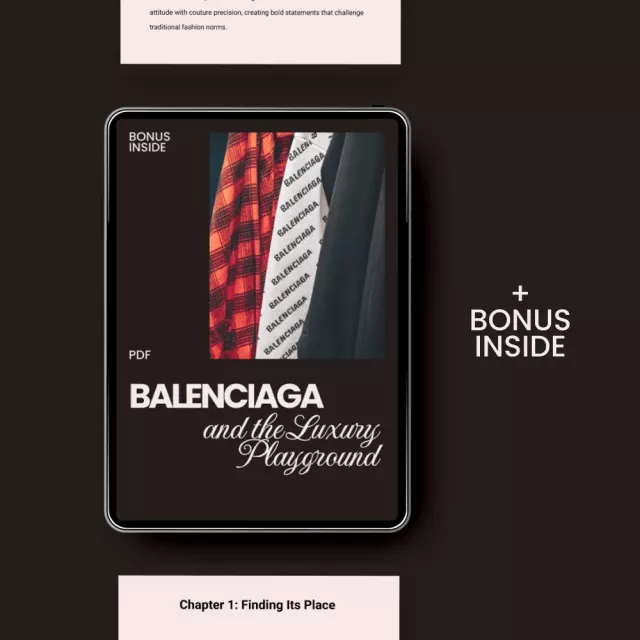
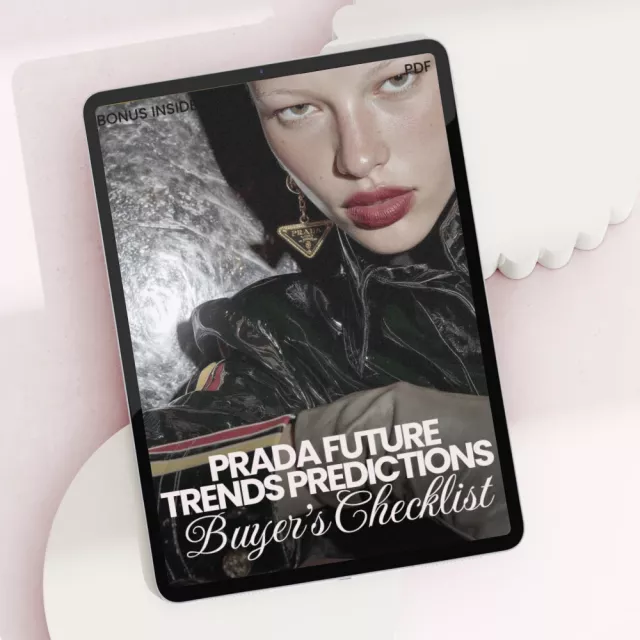
Step into the world of luxury fashion with our comprehensive guide, Decoding Prada: The Secrets Behind the Iconic Logo. Have you ever wondered what the Prada logos symbolize? This in-depth digital download takes you on a journey through the history, design, and meaning behind one of the most recognizable logos in the fashion industry. Whether you’re a fashion enthusiast, a branding expert, or simply curious about the stories behind iconic symbols, this guide is your ultimate resource.
This guide delves into the essence of Prada’s logo, providing insights that not only cover its origins but also explore its influence on modern branding. From triangular iconography to the elegant fonts, discover how this brand has woven a legacy into its visual identity. The Prada logo is more than just a design—it’s a symbol of strength, prestige, and innovation.
What’s Inside the Guide?
- Chapter 1: The Origins of the Prada Logo – Explore the rich history of Prada’s early days, the evolution from triangles to typography, and the hidden symbolism in its design.
- Chapter 2: What the Logo Really Represents – Learn about the triangular iconography that stands for strength, prestige, and innovation, as well as the importance of font choices and color/material variations.
- Chapter 3: Prada Logo in Modern Branding – A case study of how Prada’s logo influences consumer perception and tips on avoiding common branding mistakes.
- Chapter 4: Exploring the Logo Through AI – Discover how to use AI for logo analysis, get inspiration for fashion projects, and learn how to merge tradition with technology in branding.
Why This Guide is Different
Unlike other fashion branding guides, Decoding Prada: The Secrets Behind the Iconic Logo goes beyond basic logo design. This guide is packed with detailed chapters that provide practical insights into how luxury brands like Prada use their logo to create a lasting impression. Whether you are a designer, marketer, or simply a lover of fashion, this guide will deepen your understanding of logo symbolism and its impact on brand identity.
Who Is This Guide For?
This guide is perfect for anyone interested in luxury fashion, branding, and design. Whether you’re a fashion student, a designer, or a marketing professional, you’ll find valuable insights on the true meaning behind the Prada logo. If you’re passionate about understanding how iconic logos shape consumer perceptions, this guide is for you.
Practical Benefits You’ll Gain
- Understand what the Prada logos symbolize and how it enhances the brand’s prestige.
- Get an insider’s look into the history and evolution of Prada’s visual identity.
- Learn to avoid common branding mistakes and elevate your own design strategies.
- Discover how AI can enhance your understanding of logo design and help you innovate.
Download Today!
Don’t miss out on the chance to unlock the secrets behind one of the world’s most iconic logos. Download Decoding Prada: The Secrets Behind the Iconic Logo now and start exploring how this legendary brand uses its logo to define luxury, innovation, and elegance in the fashion world. Whether you’re a brand strategist or a fashion lover, this guide offers unparalleled insights into the art of logo design.
SHIPPING
We are proud to offer international shipping services that currently operate in over 200 countries and islands world wide. Nothing means more to us than bringing our customers great value and service. We will continue to grow to meet the needs of all our customers, delivering a service beyond all expectation anywhere in the world.
Do you ship worldwide?
Yes. We provide free shipping to over 200 countries around the world. However, there are some locations we are unable to ship to. If you happen to be located in one of those countries we will contact you.
What about customs?
We are not responsible for any custom fees once the items have been shipped. By purchasing our products, you consent that one or more packages may be shipped to you and may get custom fees when they arrive to your country.
How long does shipping take?
Shipping time varies by location. These are our estimates:| Location | *Estimated Shipping Time |
|---|---|
| United States | 5-20 Business days |
| Canada, Europe | 5-20 Business days |
| Australia, New Zealand | 5-20 Business days |
| Central & South America | 5-25 Business days |
| Asia | 5-20 Business days |
| Africa | 5-25 Business days |
Do you provide tracking information?
Yes, you will receive an email once your order ships that contains your tracking information. If you haven’t received tracking info within 5 days, please contact us.
My tracking says “no information available at the moment”.
For some shipping companies, it takes 2-5 business days for the tracking information to update on the system. If your order was placed more than 5 business days ago and there is still no information on your tracking number, please contact us.
Will my items be sent in one package?
For logistical reasons, items in the same purchase will sometimes be sent in separate packages, even if you've specified combined shipping.
If you have any other questions, please contact us and we will do our best to help you out.
RETURNS
Order cancellation
All orders can be cancelled until they are shipped. If your order has been paid and you need to make a change or cancel an order, you must contact us within 12 hours. Once the packaging and shipping process has started, it can no longer be cancelled.
Refunds
Your satisfaction is our #1 priority. Therefore, you can request a refund or reshipment for ordered products if:
- If you did not receive the product within the guaranteed time (45 days not including 1-3 day processing) you can request a refund or a reshipment.
- If you received the wrong item you can request a refund or a reshipment.
- If you do not want the product you’ve received you may request a refund but you must return the item at your expense and the item must be unused.
We do not issue the refund if:
- Your order did not arrive due to factors within your control (i.e. providing the wrong shipping address)
- Your order did not arrive due to exceptional circumstances outside the control of succella.com (i.e. not cleared by customs, delayed by a natural disaster).
- Other exceptional circumstances outside the control of succella.com.
*You can submit refund requests within 15 days after the guaranteed period for delivery (45 days) has expired. You can do it by sending a message on Contact Us page
If you are approved for a refund, then your refund will be processed, and a credit will automatically be applied to your credit card or original method of payment, within 14 days.
Exchanges
If for any reason you would like to exchange your product, perhaps for a different size in clothing, you must contact us first and we will guide you through the steps.
Please do not send your purchase back to us unless we authorise you to do so.
Order cancellation
All orders can be cancelled until they are shipped. If your order has been paid and you need to make a change or cancel an order, you must contact us within 12 hours. Once the packaging and shipping process has started, it can no longer be cancelled.
Refunds
Your satisfaction is our #1 priority. Therefore, you can request a refund or reshipment for ordered products if:
- If you did not receive the product within the guaranteed time( 45 days not including 2-5 day processing) you can request a refund or a reshipment.
- If you received the wrong item you can request a refund or a reshipment.
- If you do not want the product you’ve received you may request a refund but you must return the item at your expense and the item must be unused.
We do not issue the refund if:
- Your order did not arrive due to factors within your control (i.e. providing the wrong shipping address)
- Your order did not arrive due to exceptional circumstances outside the control of succella.com (i.e. not cleared by customs, delayed by a natural disaster).
- Other exceptional circumstances outside the control of https://succella.com
*You can submit refund requests within 15 days after the guaranteed period for delivery (45 days) has expired. You can do it by sending a message on Contact Us page
If you are approved for a refund, then your refund will be processed, and a credit will automatically be applied to your credit card or original method of payment, within 14 days.
Exchanges
If for any reason you would like to exchange your product, perhaps for a different size in clothing. You must contact us first and we will guide you through the steps.
Please do not send your purchase back to us unless we authorise you to do so.
Customer Reviews
Write a Review
We Think You’ll Love
Top picks just for you












The content on symbolism and consumer perception is strong. The structure jumps between historical analysis, branding theory, and AI applications in a way that occasionally feels unfocused—the connections between those domains could be made more explicitly for readers who aren't already comfortable moving between them.
I've been writing a newsletter about luxury brand identity for two years and have covered Prada's visual language several times from a fashion angle. This guide gave me a design theory framework I hadn't previously had. The argument that Prada's restraint across logo iterations is strategic rather than conservative is something I'd intuited but couldn't articulate precisely. The discussion of how the serif typeface achieves instant global recognition by balancing luxury with readability is the kind of close reading that most fashion content doesn't attempt. I've since written a piece drawing on the triangular iconography section, specifically the tension between the downward-pointing shape's historical association with stability and the triangle's general design associations with direction and innovation. My readers found that framing genuinely surprising, which tells me it's not common knowledge despite being legible in every Prada campaign.
Merging tradition and technology without losing either is the central challenge of luxury branding, and this frames it well.
Font weight and spacing as precision indicators in the Prada logo—and their use as authentication checkpoints—is something I now apply when evaluating secondhand pieces. It moved the inspection from a vague impressionistic check to something more systematic and reliable.
Well-structured overview, but the AI applications stay conceptual when specific tools would help.
Even without the full brand name visible, the triangle alone signals quality. That's the product of a century of consistent brand discipline.
The three-part framework for avoiding branding mistakes—don't overcomplicate, don't be inconsistent, don't ignore digital adaptation—is practical guidance that applies to any luxury or premium brand, not just Prada ✨ The conciseness with which those principles are stated makes them genuinely memorable.
Gold for wealth and timelessness, not just because it looks expensive. Intent versus instinct.
Four years of studying luxury brand strategy independently brought me to this guide, specifically because Prada's brand consistency came up repeatedly in my research on how luxury brands maintain pricing power across economic cycles. I went in expecting mostly history and came out with a design analysis that reframed how I think about what brand consistency actually requires at the execution level. The consumer perception section was the most valuable part. The finding that customers associate the triangular logo with quality and status even without seeing the brand name explains something I'd observed empirically in resale market data—Prada pieces with the triangle hardware visible command consistently higher prices than pieces where the logo is absent or obscured, even controlling for condition and model. I'd attributed this to recognition alone, but the guide makes clear it's more specific than that: it's an emotional association with stability, prestige, and innovation built over more than a century of consistent execution. The discussion of what overcomplicating the logo would do to that association also answered a question I'd had about why Prada has been more conservative with logo modifications than some competitors who've experimented with radical rebrandings. The AI applications section introduced me to uses of image recognition in brand monitoring I hadn't considered—specifically, tracking how often the logo appears in user-generated content as a real-time measure of brand visibility. I've since incorporated that into a framework for evaluating luxury brand health metrics beyond traditional financial indicators. The only gap I noticed was on the question of how brand identity holds across sub-brands or diffuse product lines, which becomes relevant when analyzing a house with Prada's breadth, but that's a larger question than the guide is attempting to answer.
Covers more design theory than brand history, which shifts the balance from what I expected.
The principle that AI can modernize campaigns without erasing historical significance is the key to understanding why luxury brands don't have to choose between tradition and innovation. The guide makes that argument implicitly through every section—you see how the logo evolved, why it stayed consistent in its core values, and how new tools can extend rather than disrupt that continuity.
Stability, balance, direction, innovation—all from one inverted triangle.
A useful read for anyone interested in how a single design element encodes a brand's complete value system. The symbolism and consumer perception sections are the strongest. The guide would benefit from more visual examples—discussing logo variations across materials and colors without showing them relies heavily on the reader's existing familiarity with Prada's visual history.