

Unlock the Secrets Behind the Chanel Logo’s Timeless Status Symbol
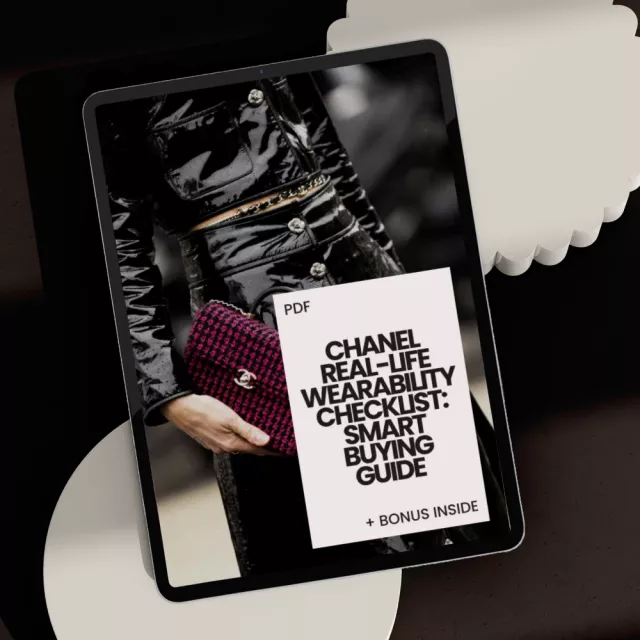
Step into the world of luxury branding with our exclusive digital guide, “Decoding the Chanel Logo and Its Status Symbol.” This insightful eBook takes you on a journey through the evolution of one of the most iconic logos in fashion history. Discover the hidden meanings, powerful symbolism, and cultural significance of the Chanel logo, and learn how it became a true status symbol in the luxury world. Whether you’re a designer, marketer, or fashion enthusiast, this guide will provide you with the knowledge and inspiration to understand and leverage brand icons effectively.
- Chapter 1: The Birth of an Icon – Explore the visionary genius of Coco Chanel and the origins of the iconic interlocking Cs.
- Chapter 2: What the Logo Really Means – Uncover the symbolism and hidden messages behind the Chanel logo, its cultural impact, and its perceived status.
- Chapter 3: Lessons from the Logo – Learn from case studies of successful logo branding and discover the branding mistakes you should avoid.
- Chapter 4: The Future of Chanel and AI in Fashion – Dive into the intersection of AI and logo design, and understand how emerging trends are shaping brand storytelling in the future.
Why Download This Guide?
This guide is a must-have for anyone interested in the Chanel logo meaning and status and how a simple logo can become a cultural phenomenon. With detailed insights into the history, symbolism, and impact of the iconic interlocking Cs, you’ll learn how the logo’s prestige has evolved over time. By examining case studies and expert advice on branding, this guide offers practical tips for designers and marketers looking to create their own successful logos.
Who is this guide for? – Fashion designers and marketers seeking inspiration from iconic brands like Chanel. – Brand strategists looking to understand the psychology behind luxury branding. – Anyone curious about the cultural significance of high-end logos and their enduring appeal. – AI enthusiasts interested in how technology is reshaping logo design and brand storytelling.
What makes this guide unique? Unlike other branding resources, this guide offers an in-depth look at how the Chanel logo became a symbol of prestige and cultural influence. With real-world case studies and actionable lessons, it goes beyond just logo design to offer valuable insights into the future of branding in the fashion industry. The inclusion of AI-driven design inspiration also sets this guide apart from traditional resources.
Get Inspired & Start Designing Today
Don’t miss out on the chance to learn from one of the most iconic symbols in fashion. Download your copy of “Decoding the Chanel Logo and Its Status Symbol” today and start exploring the meanings, lessons, and future trends that will shape the logos of tomorrow!
SHIPPING
We are proud to offer international shipping services that currently operate in over 200 countries and islands world wide. Nothing means more to us than bringing our customers great value and service. We will continue to grow to meet the needs of all our customers, delivering a service beyond all expectation anywhere in the world.
Do you ship worldwide?
Yes. We provide free shipping to over 200 countries around the world. However, there are some locations we are unable to ship to. If you happen to be located in one of those countries we will contact you.
What about customs?
We are not responsible for any custom fees once the items have been shipped. By purchasing our products, you consent that one or more packages may be shipped to you and may get custom fees when they arrive to your country.
How long does shipping take?
Shipping time varies by location. These are our estimates:| Location | *Estimated Shipping Time |
|---|---|
| United States | 5-20 Business days |
| Canada, Europe | 5-20 Business days |
| Australia, New Zealand | 5-20 Business days |
| Central & South America | 5-25 Business days |
| Asia | 5-20 Business days |
| Africa | 5-25 Business days |
Do you provide tracking information?
Yes, you will receive an email once your order ships that contains your tracking information. If you haven’t received tracking info within 5 days, please contact us.
My tracking says “no information available at the moment”.
For some shipping companies, it takes 2-5 business days for the tracking information to update on the system. If your order was placed more than 5 business days ago and there is still no information on your tracking number, please contact us.
Will my items be sent in one package?
For logistical reasons, items in the same purchase will sometimes be sent in separate packages, even if you've specified combined shipping.
If you have any other questions, please contact us and we will do our best to help you out.
RETURNS
Order cancellation
All orders can be cancelled until they are shipped. If your order has been paid and you need to make a change or cancel an order, you must contact us within 12 hours. Once the packaging and shipping process has started, it can no longer be cancelled.
Refunds
Your satisfaction is our #1 priority. Therefore, you can request a refund or reshipment for ordered products if:
- If you did not receive the product within the guaranteed time (45 days not including 1-3 day processing) you can request a refund or a reshipment.
- If you received the wrong item you can request a refund or a reshipment.
- If you do not want the product you’ve received you may request a refund but you must return the item at your expense and the item must be unused.
We do not issue the refund if:
- Your order did not arrive due to factors within your control (i.e. providing the wrong shipping address)
- Your order did not arrive due to exceptional circumstances outside the control of succella.com (i.e. not cleared by customs, delayed by a natural disaster).
- Other exceptional circumstances outside the control of succella.com.
*You can submit refund requests within 15 days after the guaranteed period for delivery (45 days) has expired. You can do it by sending a message on Contact Us page
If you are approved for a refund, then your refund will be processed, and a credit will automatically be applied to your credit card or original method of payment, within 14 days.
Exchanges
If for any reason you would like to exchange your product, perhaps for a different size in clothing, you must contact us first and we will guide you through the steps.
Please do not send your purchase back to us unless we authorise you to do so.
Order cancellation
All orders can be cancelled until they are shipped. If your order has been paid and you need to make a change or cancel an order, you must contact us within 12 hours. Once the packaging and shipping process has started, it can no longer be cancelled.
Refunds
Your satisfaction is our #1 priority. Therefore, you can request a refund or reshipment for ordered products if:
- If you did not receive the product within the guaranteed time( 45 days not including 2-5 day processing) you can request a refund or a reshipment.
- If you received the wrong item you can request a refund or a reshipment.
- If you do not want the product you’ve received you may request a refund but you must return the item at your expense and the item must be unused.
We do not issue the refund if:
- Your order did not arrive due to factors within your control (i.e. providing the wrong shipping address)
- Your order did not arrive due to exceptional circumstances outside the control of succella.com (i.e. not cleared by customs, delayed by a natural disaster).
- Other exceptional circumstances outside the control of https://succella.com
*You can submit refund requests within 15 days after the guaranteed period for delivery (45 days) has expired. You can do it by sending a message on Contact Us page
If you are approved for a refund, then your refund will be processed, and a credit will automatically be applied to your credit card or original method of payment, within 14 days.
Exchanges
If for any reason you would like to exchange your product, perhaps for a different size in clothing. You must contact us first and we will guide you through the steps.
Please do not send your purchase back to us unless we authorise you to do so.
Customer Reviews
Write a Review
We Think You’ll Love
Top picks just for you













💎🖤⭐👌✨
The closing thoughts tied everything together without repeating earlier points — rare for this format.
Chapter 2 alone is worth it for anyone studying consumer perception of luxury.
Gave this to a friend rebranding her jewelry line and she called me that night to talk through the case studies.
The cultural context warning about symbols having unintended meanings in different regions is something I wish more branding guides covered this directly. Solid throughout.
Coco as revolutionary, not just designer — that framing set the right tone from page one.
The AI trend analysis section felt more grounded than most takes on AI in fashion. No hype, just practical applications like scraping social feeds and testing logo variations in virtual environments before production. That said, I wanted more depth on sentiment analysis methodology — it's mentioned but not unpacked enough to actually implement without outside research.
Read this after a rebrand went sideways at work and the mistakes-to-avoid section explained exactly what we did wrong 😅
Most branding PDFs are either too academic or too shallow — this threads the needle.
The double C as a social membership signal was the sharpest observation in Chapter 2.
Printed the AI prompt examples and pinned them above my desk.
I run a small streetwear label and I've been struggling with when to update my logo versus when to leave it alone. This guide answered that question decisively. The section on changing core symbols too often — with the example of mid-tier brands losing recognition — was like reading a case file on my own past mistakes. I'd redesigned my mark three times in two years and couldn't figure out why nobody recognized it. After reading Chapter 3 I committed to locking in one version and letting consistency do the work. It's been four months and the difference in brand recall is already noticeable.
Section 1.3 on evolution through the decades is a masterclass in timeline storytelling.
The balance between heritage content and forward-looking AI chapters is well calibrated.
Tight, useful, no wasted pages.
Interlocking Cs as balance and harmony — that reframed how I evaluate symmetry in my own logo work.
The consumer perception section nailed the difference between seeing a logo and feeling it.
Chapter 4 bridges old-school luxury thinking with where branding is actually going.
I study fashion marketing and this is the tightest breakdown of logo-as-status-symbol I've found outside academic papers. The way it connects Coco's personal story to the empowerment layer of the logo — and then to how modern consumers emotionally respond to it — is a narrative arc most branding guides can't pull off.
🔥👏💎
Every chapter builds on the last — there's a real structure here, not just loosely related sections.
The virtual try-on mention in Chapter 4 connected dots I hadn't linked between AR tech and emotional branding.
I appreciated the history and the case studies, but the AI chapter feels like it's covering a lot of ground without going deep on any one application. Trend analysis, sentiment analysis, virtual try-ons, logo simulation — each of those could be its own section. Still a strong read overall, especially Chapters 1 through 3.
Used the Chanel-vs-LV comparison to win an argument about brand consistency at work.
The AI prompts are the kind of practical tool I actually save and reuse.