


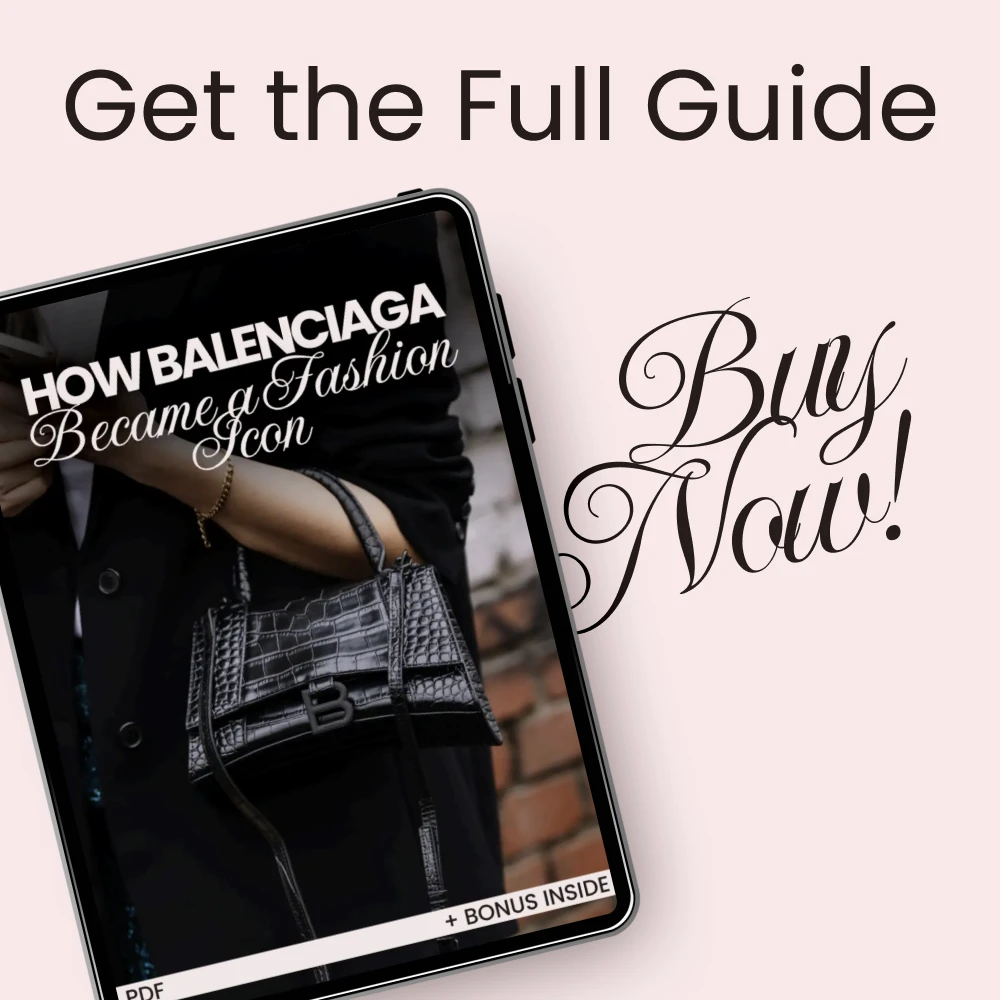
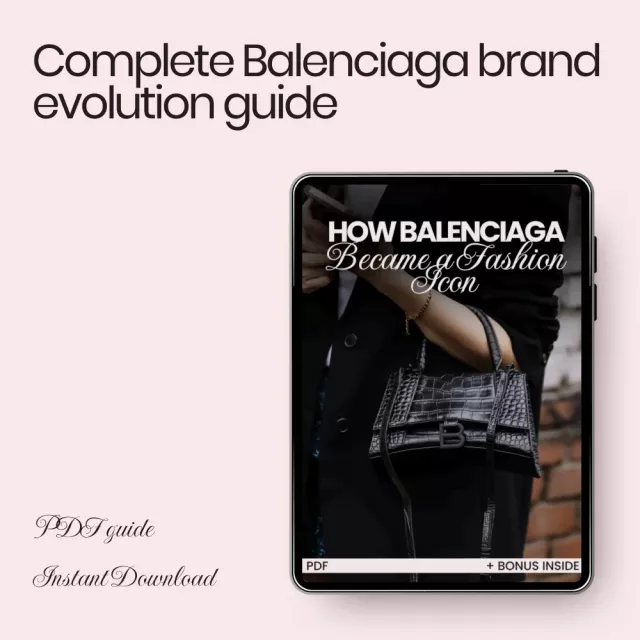
Discover the Story Behind One of Fashion’s Most Powerful Names
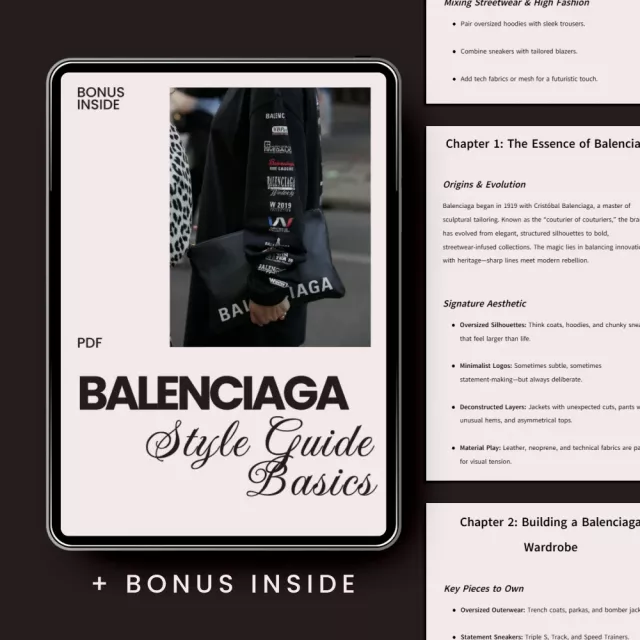
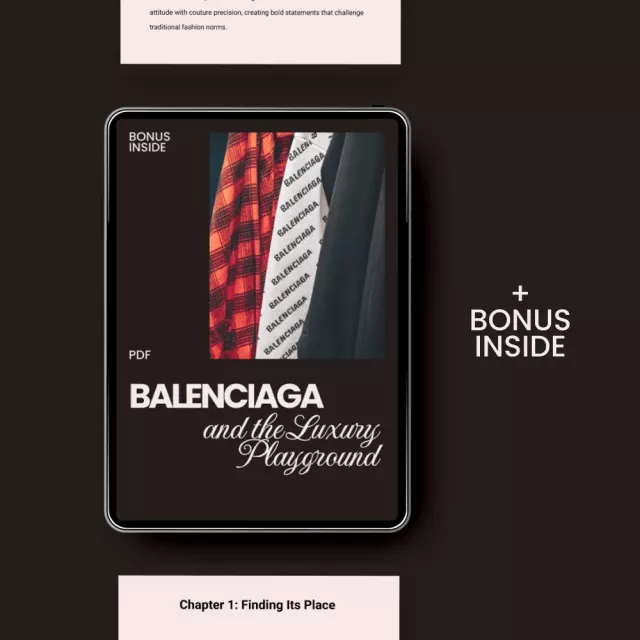
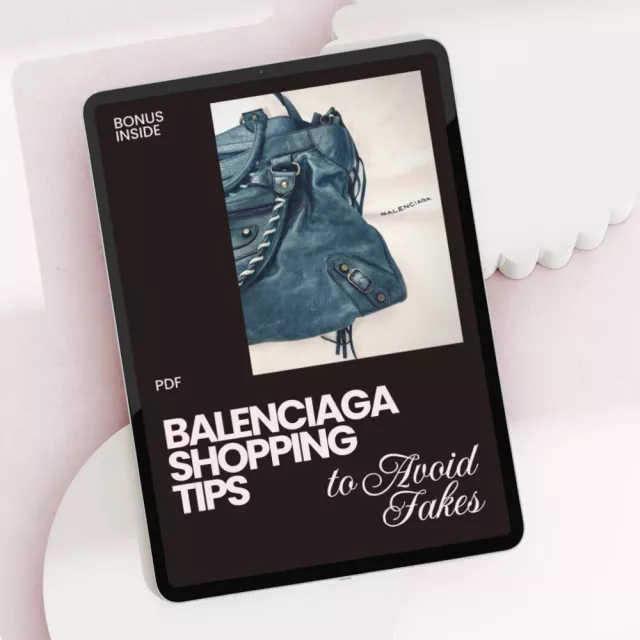
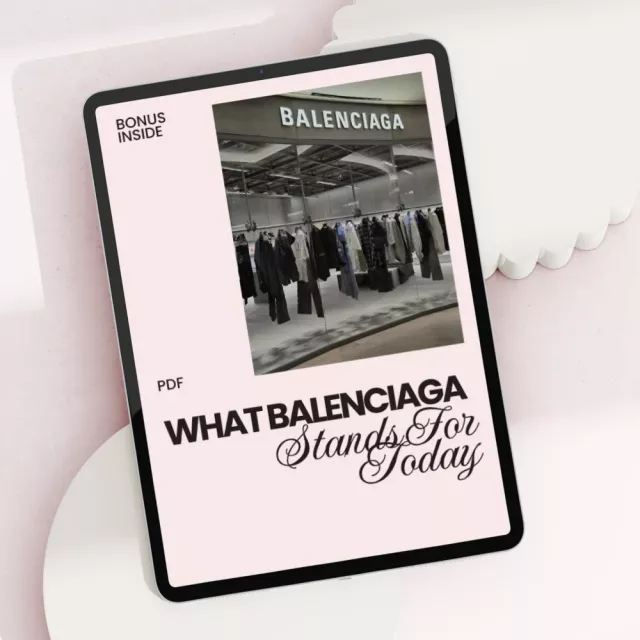
Step inside the world of couture, controversy, innovation, and reinvention with How Balenciaga Became a Fashion Icon. This in-depth digital eBook unpacks the evolution of one of the most influential luxury houses in modern history. From Cristóbal Balenciaga’s revolutionary silhouettes to the disruptive streetwear era, this is the ultimate balenciaga brand history explained in a clear, engaging, and practical way.
Whether you’re a fashion student, brand strategist, content creator, or simply obsessed with luxury fashion, this guide breaks down complex brand evolution into easy-to-understand insights you can actually use.
What’s Inside This eBook
- The Founder: Cristóbal Balenciaga’s Vision – Early life in Spain, couture training, and what made his designs revolutionary
- The Paris Years – Signature silhouettes, haute couture mastery, and influence on other designers
- Silence and Revival – Why the house closed in 1968 and how it rebuilt its legacy
- The Ghesquière Era – Reinvention, the Motorcycle Bag phenomenon, and smart brand decisions
- Demna’s Disruption – Oversized everything, the Triple S sneaker case study, and navigating controversy
- Balenciaga Today – Strategy within Kering, meme culture, celebrity power, and global reach
- How to Analyze a Luxury Brand Like Balenciaga – Frameworks and key questions for students
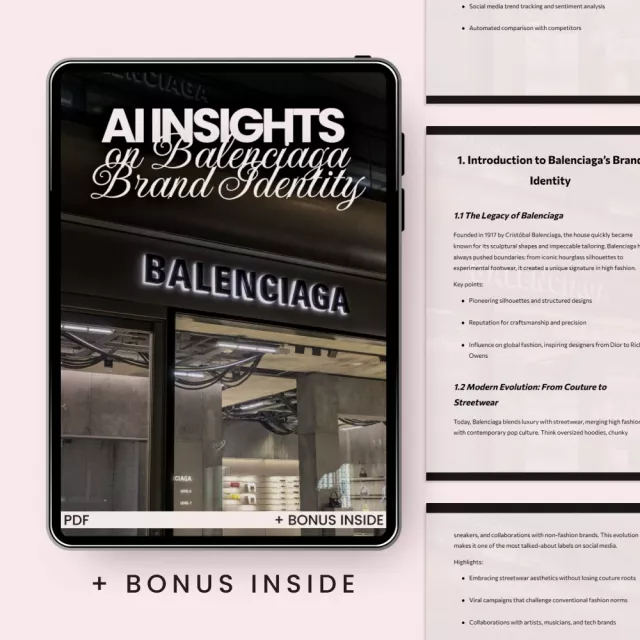
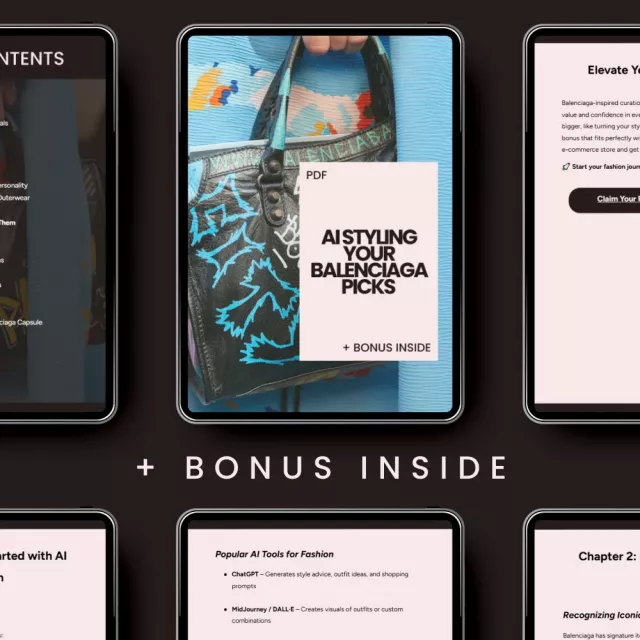
- Using AI to Explore and Recreate Balenciaga’s World – ChatGPT prompts, Midjourney ideas, and free tools for research
Who Is This For?
- Fashion students and graduates
- Luxury brand enthusiasts
- Marketing and branding professionals
- Content creators and fashion bloggers
- Entrepreneurs building premium brands
Why This eBook Is Different
Unlike surface-level fashion summaries, this guide goes deeper. It doesn’t just tell you what happened — it explains why it mattered. You’ll learn how each creative director reshaped the brand, how risk and controversy were managed, and how innovation kept the house culturally relevant.
This is not just a history lesson. It’s a practical brand analysis framework wrapped inside a compelling fashion story. You’ll walk away understanding positioning, identity shifts, product strategy, and cultural influence — all through the lens of a single iconic brand.
Practical Benefits You’ll Gain
- Understand luxury brand evolution step by step
- Learn how creative direction impacts business growth
- Apply a clear framework to analyze other fashion houses
- Discover how digital culture and AI tools shape modern branding
- Gain inspiration for your own fashion or creative projects
Instant Download – Start Exploring Today
This is a digital download, so you can start reading immediately after purchase. No waiting, no shipping — just instant access to a professionally written, structured, and insight-packed eBook.
If you’ve ever wanted the complete balenciaga brand history explained in a way that’s engaging, strategic, and actionable, this guide is for you.
Download your copy of How Balenciaga Became a Fashion Icon today and unlock the strategy behind one of fashion’s most powerful empires.
SHIPPING
We are proud to offer international shipping services that currently operate in over 200 countries and islands world wide. Nothing means more to us than bringing our customers great value and service. We will continue to grow to meet the needs of all our customers, delivering a service beyond all expectation anywhere in the world.
Do you ship worldwide?
Yes. We provide free shipping to over 200 countries around the world. However, there are some locations we are unable to ship to. If you happen to be located in one of those countries we will contact you.
What about customs?
We are not responsible for any custom fees once the items have been shipped. By purchasing our products, you consent that one or more packages may be shipped to you and may get custom fees when they arrive to your country.
How long does shipping take?
Shipping time varies by location. These are our estimates:| Location | *Estimated Shipping Time |
|---|---|
| United States | 5-20 Business days |
| Canada, Europe | 5-20 Business days |
| Australia, New Zealand | 5-20 Business days |
| Central & South America | 5-25 Business days |
| Asia | 5-20 Business days |
| Africa | 5-25 Business days |
Do you provide tracking information?
Yes, you will receive an email once your order ships that contains your tracking information. If you haven’t received tracking info within 5 days, please contact us.
My tracking says “no information available at the moment”.
For some shipping companies, it takes 2-5 business days for the tracking information to update on the system. If your order was placed more than 5 business days ago and there is still no information on your tracking number, please contact us.
Will my items be sent in one package?
For logistical reasons, items in the same purchase will sometimes be sent in separate packages, even if you've specified combined shipping.
If you have any other questions, please contact us and we will do our best to help you out.
RETURNS
Order cancellation
All orders can be cancelled until they are shipped. If your order has been paid and you need to make a change or cancel an order, you must contact us within 12 hours. Once the packaging and shipping process has started, it can no longer be cancelled.
Refunds
Your satisfaction is our #1 priority. Therefore, you can request a refund or reshipment for ordered products if:
- If you did not receive the product within the guaranteed time (45 days not including 1-3 day processing) you can request a refund or a reshipment.
- If you received the wrong item you can request a refund or a reshipment.
- If you do not want the product you’ve received you may request a refund but you must return the item at your expense and the item must be unused.
We do not issue the refund if:
- Your order did not arrive due to factors within your control (i.e. providing the wrong shipping address)
- Your order did not arrive due to exceptional circumstances outside the control of succella.com (i.e. not cleared by customs, delayed by a natural disaster).
- Other exceptional circumstances outside the control of succella.com.
*You can submit refund requests within 15 days after the guaranteed period for delivery (45 days) has expired. You can do it by sending a message on Contact Us page
If you are approved for a refund, then your refund will be processed, and a credit will automatically be applied to your credit card or original method of payment, within 14 days.
Exchanges
If for any reason you would like to exchange your product, perhaps for a different size in clothing, you must contact us first and we will guide you through the steps.
Please do not send your purchase back to us unless we authorise you to do so.
Order cancellation
All orders can be cancelled until they are shipped. If your order has been paid and you need to make a change or cancel an order, you must contact us within 12 hours. Once the packaging and shipping process has started, it can no longer be cancelled.
Refunds
Your satisfaction is our #1 priority. Therefore, you can request a refund or reshipment for ordered products if:
- If you did not receive the product within the guaranteed time( 45 days not including 2-5 day processing) you can request a refund or a reshipment.
- If you received the wrong item you can request a refund or a reshipment.
- If you do not want the product you’ve received you may request a refund but you must return the item at your expense and the item must be unused.
We do not issue the refund if:
- Your order did not arrive due to factors within your control (i.e. providing the wrong shipping address)
- Your order did not arrive due to exceptional circumstances outside the control of succella.com (i.e. not cleared by customs, delayed by a natural disaster).
- Other exceptional circumstances outside the control of https://succella.com
*You can submit refund requests within 15 days after the guaranteed period for delivery (45 days) has expired. You can do it by sending a message on Contact Us page
If you are approved for a refund, then your refund will be processed, and a credit will automatically be applied to your credit card or original method of payment, within 14 days.
Exchanges
If for any reason you would like to exchange your product, perhaps for a different size in clothing. You must contact us first and we will guide you through the steps.
Please do not send your purchase back to us unless we authorise you to do so.
Customer Reviews
Write a Review
We Think You’ll Love
Top picks just for you












The concept of recalibration over reinvention is the smartest framing I've seen applied to luxury brand evolution. That single idea reoriented how I think about heritage labels adapting to new markets.
Every era gets its due respect without the writing dragging
I came for the Demna analysis but stayed for the Cristóbal chapters. The story about him recreating the aristocrat's dress as a teenager — and that becoming his entry into fashion — hit differently than I expected. It grounded the entire PDF in something real before getting into strategy and theory.
The three-era comparison is done better here than in most fashion textbooks I own
I was skeptical about another Balenciaga explainer but the brand evolution framework won me over. It's genuinely transferable — I've already applied it to analyze two other Kering houses for a client presentation and the structure held up perfectly.
✨🖤👏🔥
The controversy section could have gone deeper. It raises the right questions about brand risk and provocation but doesn't follow through with enough concrete analysis of the aftermath. The rest of the guide is strong enough that this gap stood out.
Genuinely learned more from this than a semester of brand strategy coursework. The way it uses each creative director as a lens for different approaches to innovation — technical mastery, intellectual futurism, cultural disruption — gave me vocabulary I didn't have before. The practical exercises pushed me to actually apply the concepts rather than just nod along.
The Kering positioning section added context I wasn't expecting
I'm a brand strategist who has been studying luxury houses for over a decade, and what struck me about this guide is how it treats the 1968 closure not as a failure but as a philosophical decision with long-term brand implications. Most analyses I've read frame it as Cristóbal being stubborn or out of touch, but this PDF argues it was a principled stance about craftsmanship that actually preserved the brand's integrity for its eventual revival. That reframing alone made me rethink two case studies I'd written for clients. The connection it draws between that moment and the three pillars of the 1990s rebuild — heritage storytelling, modern silhouettes, strategic scarcity — is the kind of strategic threading that separates good analysis from great analysis. My only wish is that it spent more time on the financial dimensions of each era.
Finally a guide that doesn't treat Demna's era as the only interesting chapter
The case studies carry this whole PDF. Both the Motorcycle Bag and Triple S sections go beyond surface-level hype analysis into why those products succeeded strategically. The common thread — introducing contrast in a saturated market — is a principle I've started applying to my own work.
Interesting read but I felt the writing tone shifted noticeably between the history chapters and the AI section. The first seven chapters have a confident, editorial voice, then the last chapter reads more like a tutorial. Not a dealbreaker, but the inconsistency was noticeable.
The balloon jacket and sack dress context made the founder's vision tangible
This is the guide I wish I'd had when I started my fashion marketing career. The strategic reflection questions at the end of the Demna chapter — about where the line sits between commentary and offense — are exactly the kind of questions brands should be asking themselves before every campaign launch 🙌
Packed with insight but never feels dense
Good foundation but some of the AI tool recommendations are showing their age. Perplexity has changed significantly and a few of the Midjourney prompt structures don't reflect current best practices. The historical and strategic content more than compensates though.
The way it frames the Triple S as a case study in polarization driving attention — that principle applies way beyond fashion and I've already borrowed it for a tech product launch strategy
Cristóbal's story deserves a film and this PDF makes that obvious
The three comeback lessons — heritage isn't enough, ownership matters, reinvention must be rooted in DNA — are as applicable to startups as they are to fashion houses. I printed that page and pinned it above my desk.
I wanted to like this more than I did. The historical content is well-researched and the case studies are engaging, but the analysis chapter felt like it was trying to be a textbook and a casual guide at the same time. Committing to one tone would have made it stronger.
❤️🔥👌⭐
The detail about Cristóbal using black not as minimalism but as focus — prioritizing shape over decoration — completely recontextualized how I look at monochrome collections today. That one observation was worth the entire read.
Wish the celebrity power section went deeper into specific partnership dynamics. The point about volatility when celebrities face scrutiny is important but underdeveloped compared to the other case studies. Strong everywhere else.
The practical exercises actually made me stop and think