


Unlock the Secrets Behind the Chanel Logo’s Timeless Status Symbol
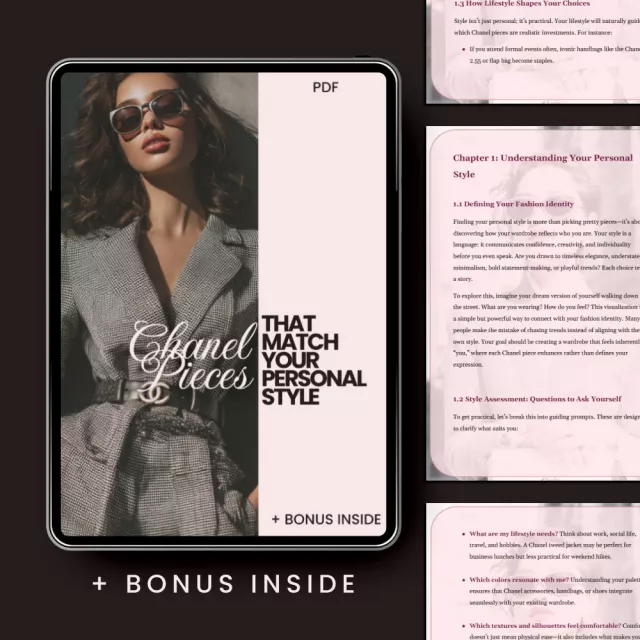
Step into the world of luxury branding with our exclusive digital guide, “Decoding the Chanel Logo and Its Status Symbol.” This insightful eBook takes you on a journey through the evolution of one of the most iconic logos in fashion history. Discover the hidden meanings, powerful symbolism, and cultural significance of the Chanel logo, and learn how it became a true status symbol in the luxury world. Whether you’re a designer, marketer, or fashion enthusiast, this guide will provide you with the knowledge and inspiration to understand and leverage brand icons effectively.
- Chapter 1: The Birth of an Icon – Explore the visionary genius of Coco Chanel and the origins of the iconic interlocking Cs.
- Chapter 2: What the Logo Really Means – Uncover the symbolism and hidden messages behind the Chanel logo, its cultural impact, and its perceived status.
- Chapter 3: Lessons from the Logo – Learn from case studies of successful logo branding and discover the branding mistakes you should avoid.
- Chapter 4: The Future of Chanel and AI in Fashion – Dive into the intersection of AI and logo design, and understand how emerging trends are shaping brand storytelling in the future.
Why Download This Guide?
This guide is a must-have for anyone interested in the Chanel logo meaning and status and how a simple logo can become a cultural phenomenon. With detailed insights into the history, symbolism, and impact of the iconic interlocking Cs, you’ll learn how the logo’s prestige has evolved over time. By examining case studies and expert advice on branding, this guide offers practical tips for designers and marketers looking to create their own successful logos.
Who is this guide for? – Fashion designers and marketers seeking inspiration from iconic brands like Chanel. – Brand strategists looking to understand the psychology behind luxury branding. – Anyone curious about the cultural significance of high-end logos and their enduring appeal. – AI enthusiasts interested in how technology is reshaping logo design and brand storytelling.
What makes this guide unique? Unlike other branding resources, this guide offers an in-depth look at how the Chanel logo became a symbol of prestige and cultural influence. With real-world case studies and actionable lessons, it goes beyond just logo design to offer valuable insights into the future of branding in the fashion industry. The inclusion of AI-driven design inspiration also sets this guide apart from traditional resources.
Get Inspired & Start Designing Today
Don’t miss out on the chance to learn from one of the most iconic symbols in fashion. Download your copy of “Decoding the Chanel Logo and Its Status Symbol” today and start exploring the meanings, lessons, and future trends that will shape the logos of tomorrow!
SHIPPING
We are proud to offer international shipping services that currently operate in over 200 countries and islands world wide. Nothing means more to us than bringing our customers great value and service. We will continue to grow to meet the needs of all our customers, delivering a service beyond all expectation anywhere in the world.
Do you ship worldwide?
Yes. We provide free shipping to over 200 countries around the world. However, there are some locations we are unable to ship to. If you happen to be located in one of those countries we will contact you.
What about customs?
We are not responsible for any custom fees once the items have been shipped. By purchasing our products, you consent that one or more packages may be shipped to you and may get custom fees when they arrive to your country.
How long does shipping take?
Shipping time varies by location. These are our estimates:| Location | *Estimated Shipping Time |
|---|---|
| United States | 5-20 Business days |
| Canada, Europe | 5-20 Business days |
| Australia, New Zealand | 5-20 Business days |
| Central & South America | 5-25 Business days |
| Asia | 5-20 Business days |
| Africa | 5-25 Business days |
Do you provide tracking information?
Yes, you will receive an email once your order ships that contains your tracking information. If you haven’t received tracking info within 5 days, please contact us.
My tracking says “no information available at the moment”.
For some shipping companies, it takes 2-5 business days for the tracking information to update on the system. If your order was placed more than 5 business days ago and there is still no information on your tracking number, please contact us.
Will my items be sent in one package?
For logistical reasons, items in the same purchase will sometimes be sent in separate packages, even if you've specified combined shipping.
If you have any other questions, please contact us and we will do our best to help you out.
RETURNS
Order cancellation
All orders can be cancelled until they are shipped. If your order has been paid and you need to make a change or cancel an order, you must contact us within 12 hours. Once the packaging and shipping process has started, it can no longer be cancelled.
Refunds
Your satisfaction is our #1 priority. Therefore, you can request a refund or reshipment for ordered products if:
- If you did not receive the product within the guaranteed time (45 days not including 1-3 day processing) you can request a refund or a reshipment.
- If you received the wrong item you can request a refund or a reshipment.
- If you do not want the product you’ve received you may request a refund but you must return the item at your expense and the item must be unused.
We do not issue the refund if:
- Your order did not arrive due to factors within your control (i.e. providing the wrong shipping address)
- Your order did not arrive due to exceptional circumstances outside the control of succella.com (i.e. not cleared by customs, delayed by a natural disaster).
- Other exceptional circumstances outside the control of succella.com.
*You can submit refund requests within 15 days after the guaranteed period for delivery (45 days) has expired. You can do it by sending a message on Contact Us page
If you are approved for a refund, then your refund will be processed, and a credit will automatically be applied to your credit card or original method of payment, within 14 days.
Exchanges
If for any reason you would like to exchange your product, perhaps for a different size in clothing, you must contact us first and we will guide you through the steps.
Please do not send your purchase back to us unless we authorise you to do so.
Order cancellation
All orders can be cancelled until they are shipped. If your order has been paid and you need to make a change or cancel an order, you must contact us within 12 hours. Once the packaging and shipping process has started, it can no longer be cancelled.
Refunds
Your satisfaction is our #1 priority. Therefore, you can request a refund or reshipment for ordered products if:
- If you did not receive the product within the guaranteed time( 45 days not including 2-5 day processing) you can request a refund or a reshipment.
- If you received the wrong item you can request a refund or a reshipment.
- If you do not want the product you’ve received you may request a refund but you must return the item at your expense and the item must be unused.
We do not issue the refund if:
- Your order did not arrive due to factors within your control (i.e. providing the wrong shipping address)
- Your order did not arrive due to exceptional circumstances outside the control of succella.com (i.e. not cleared by customs, delayed by a natural disaster).
- Other exceptional circumstances outside the control of https://succella.com
*You can submit refund requests within 15 days after the guaranteed period for delivery (45 days) has expired. You can do it by sending a message on Contact Us page
If you are approved for a refund, then your refund will be processed, and a credit will automatically be applied to your credit card or original method of payment, within 14 days.
Exchanges
If for any reason you would like to exchange your product, perhaps for a different size in clothing. You must contact us first and we will guide you through the steps.
Please do not send your purchase back to us unless we authorise you to do so.
Customer Reviews
Write a Review
We Think You’ll Love
Top picks just for you
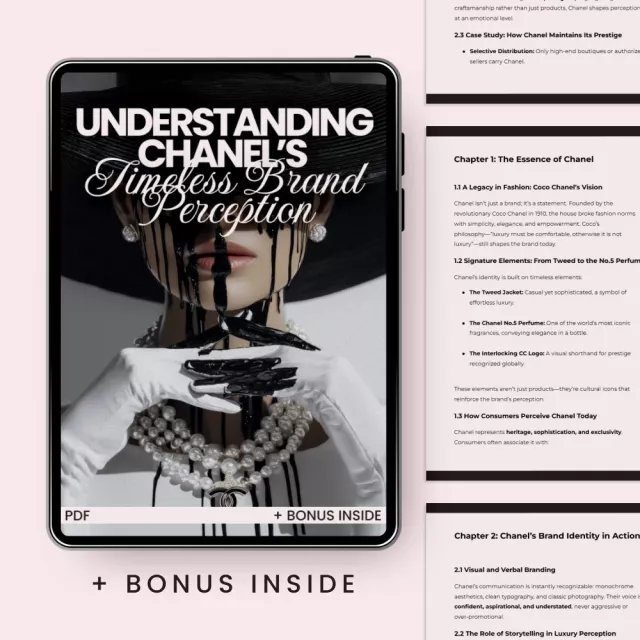
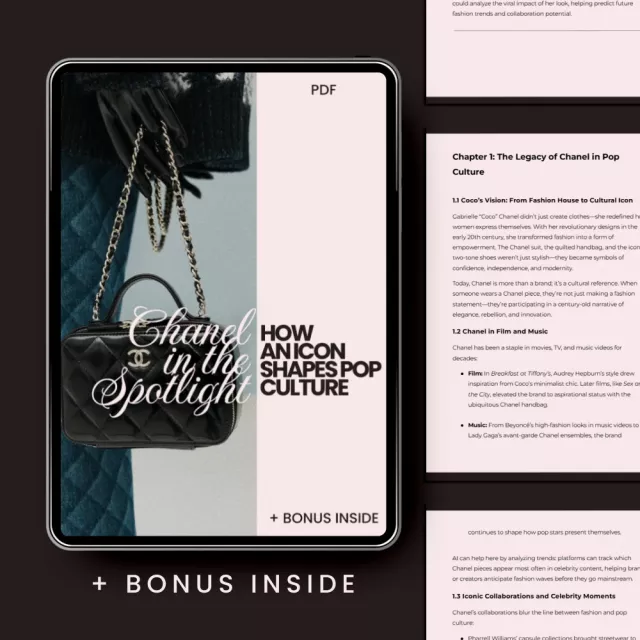












The Château de Crémat origin theory for the interlocking Cs was new to me — that detail alone made this worth reading.
Chapter 2 on symbolism rewired how I think about logo design.
The Chanel vs. Louis Vuitton case study in Chapter 3 is the crispest comparison of restraint versus decoration I've come across. I kept going back to the point about consistency building recognition. Ended up using that framework in a client presentation the next day and it landed perfectly — my creative director even asked where I pulled it from.
Mirrored design communicating balance and harmony — never thought of it that way 🔥
Clean writing, zero filler, every chapter earns its place.
The AI prompt examples in section 3 are surprisingly practical for actual design work.
Read it in one sitting on a flight and took a full page of notes. The evolution timeline from the 1920s through today was the backbone I needed for a brand history project. Seeing how the logo moved from couture pieces to handbags to global status symbol gave me a template for tracking any brand's visual identity over time.
Section 2.2 on cultural impact hit different.
The branding mistakes section should be mandatory reading for anyone launching a logo.
❤️✨👏🔥
Used the AI design prompts with Midjourney and got genuinely usable concepts on the first try.
The 2.55 handbag case study made the abstract idea of exclusivity feel concrete and measurable. That's hard to do in four sentences.
I teach a university branding course and I'm adding Chapter 3 to my syllabus. The case studies distill complex brand strategy into clear lessons without dumbing anything down. My students usually glaze over when I lecture on logo longevity, but when I previewed the Chanel-vs-LV comparison in class last week, the discussion went twenty minutes over. The section on frequent redesigns confusing consumers especially resonated — half the class immediately connected it to brands they'd watched fumble their identity in real time.
Short, dense, and I've already reread it twice.
The point about overcomplication diluting brand identity is so obvious once you read it, but I'd never articulated it that clearly.
Chapter 4 on AI in fashion branding felt genuinely forward-thinking rather than buzzwordy. The virtual try-on section especially — that's where the industry is actually heading.
The empowerment layer of the logo's symbolism was my favorite insight.
Bought this for the history, stayed for the AI applications.
Simplicity as genius — that thread running through every chapter made the whole thing cohesive.
The sentiment analysis gave me a concrete workflow I hadn't considered. Strong bridge between fashion theory and marketing ops.
Forwarded Chapter 1 to my entire design team before lunch.
The art deco influence on the interlocking Cs was the context I was missing.
I picked this up expecting surface-level logo history and instead got a genuine branding education. The way it traces Coco's personal initials through art deco influences to the Château de Crémat rumor gives the origin story real texture. But what surprised me most was Chapter 3 — the branding mistakes section made me audit my own freelance identity on the spot. I realized I'd been over-tweaking my logo exactly the way the guide warns against. Stripped it back that evening and three clients commented it looked sharper within a week.
Section on logo evolution simulation is where this goes from interesting to actionable.
Every designer needs the overcomplication warning tattooed somewhere visible.