


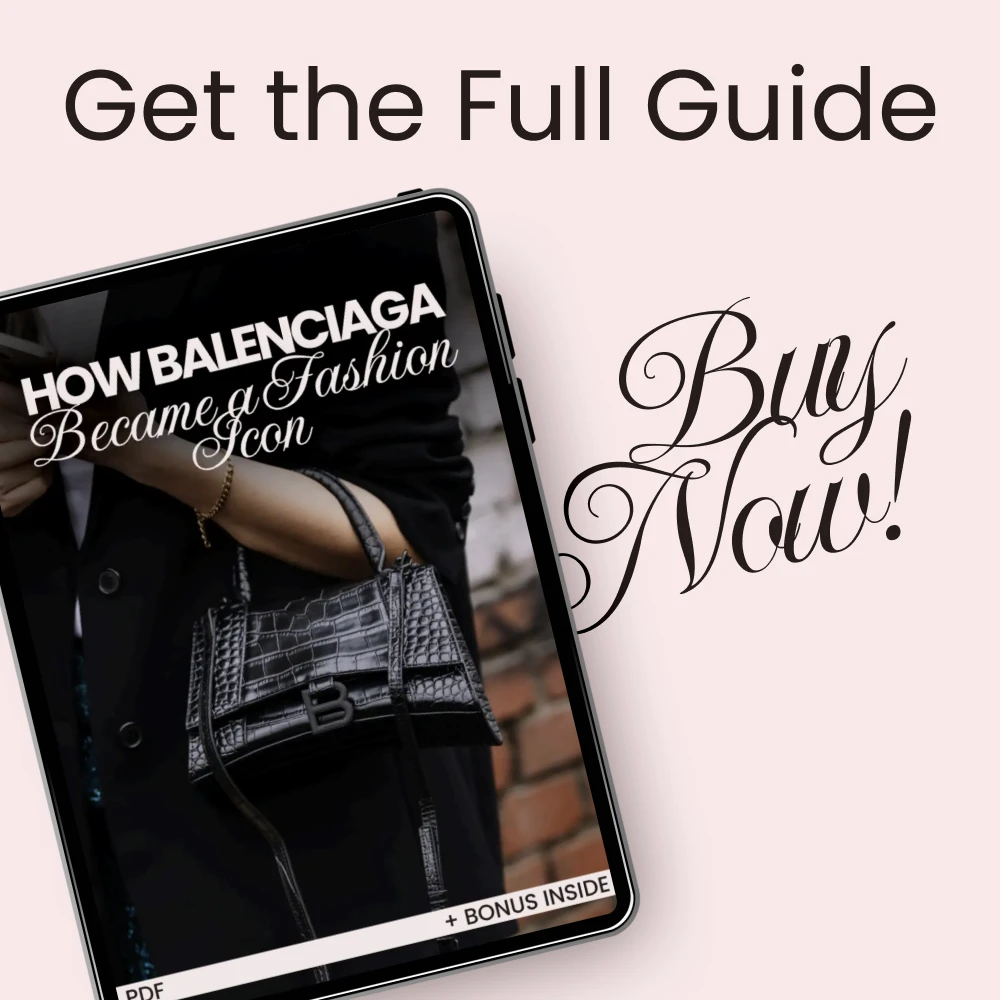
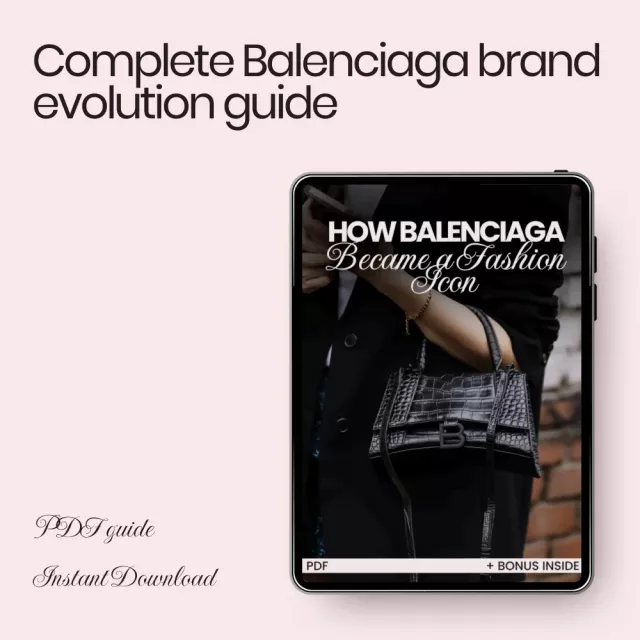
Discover the Story Behind One of Fashion’s Most Powerful Names
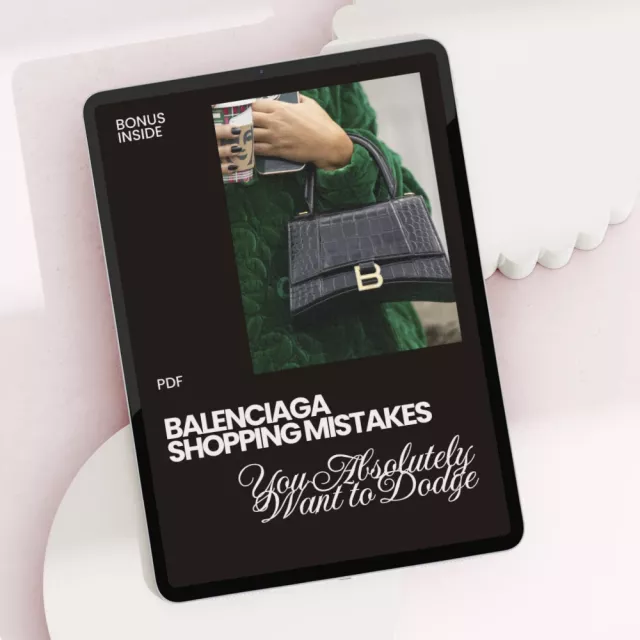
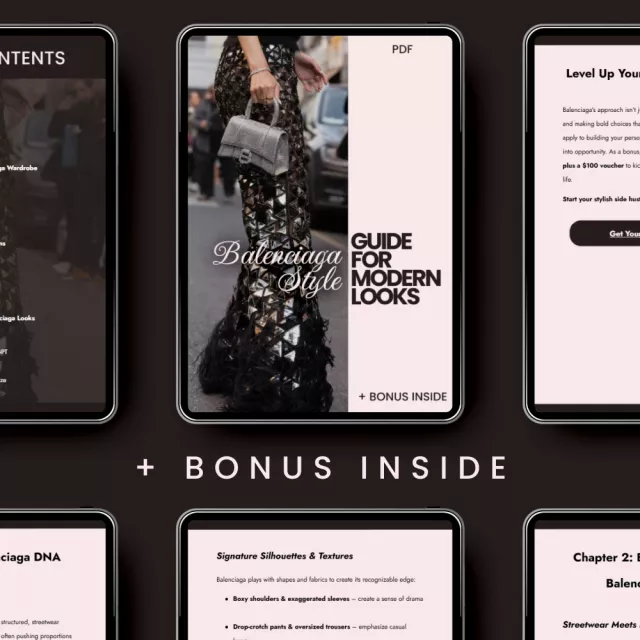
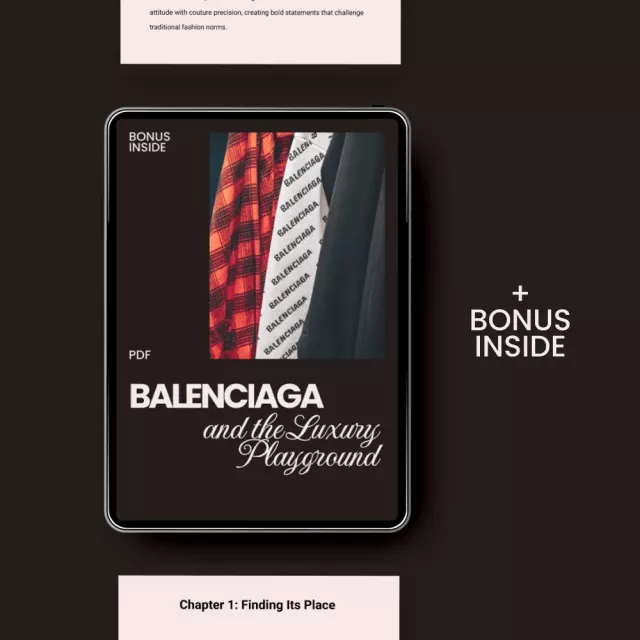
Step inside the world of couture, controversy, innovation, and reinvention with How Balenciaga Became a Fashion Icon. This in-depth digital eBook unpacks the evolution of one of the most influential luxury houses in modern history. From Cristóbal Balenciaga’s revolutionary silhouettes to the disruptive streetwear era, this is the ultimate balenciaga brand history explained in a clear, engaging, and practical way.
Whether you’re a fashion student, brand strategist, content creator, or simply obsessed with luxury fashion, this guide breaks down complex brand evolution into easy-to-understand insights you can actually use.
What’s Inside This eBook
- The Founder: Cristóbal Balenciaga’s Vision – Early life in Spain, couture training, and what made his designs revolutionary
- The Paris Years – Signature silhouettes, haute couture mastery, and influence on other designers
- Silence and Revival – Why the house closed in 1968 and how it rebuilt its legacy
- The Ghesquière Era – Reinvention, the Motorcycle Bag phenomenon, and smart brand decisions
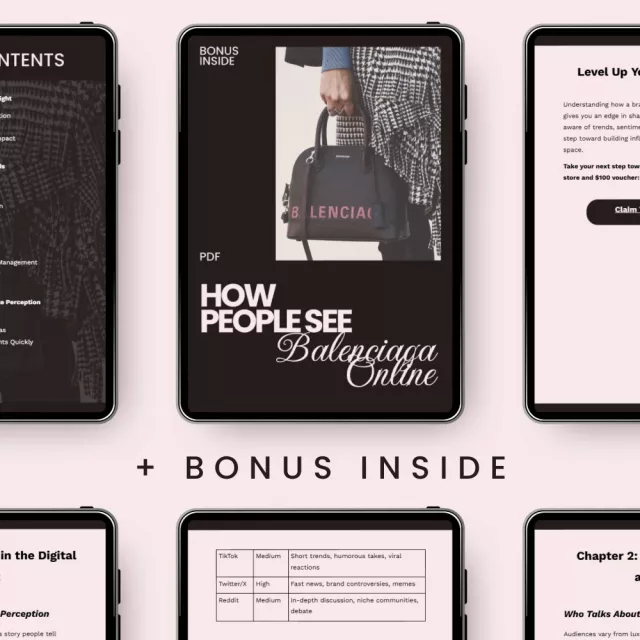
- Demna’s Disruption – Oversized everything, the Triple S sneaker case study, and navigating controversy
- Balenciaga Today – Strategy within Kering, meme culture, celebrity power, and global reach
- How to Analyze a Luxury Brand Like Balenciaga – Frameworks and key questions for students
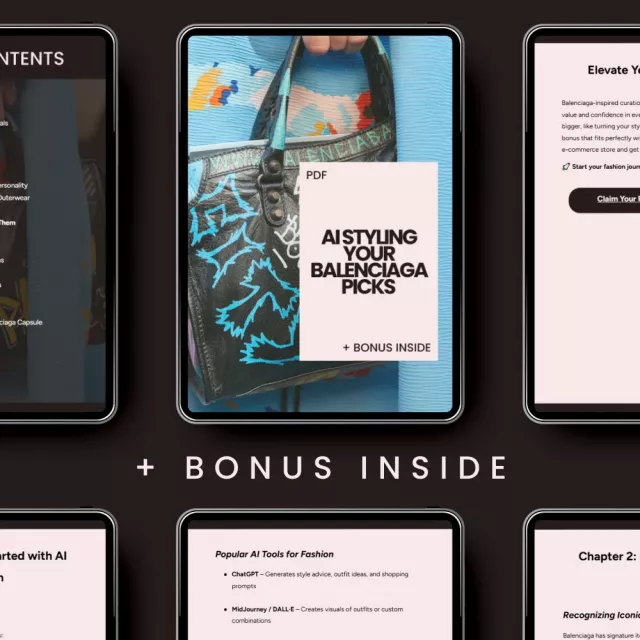
- Using AI to Explore and Recreate Balenciaga’s World – ChatGPT prompts, Midjourney ideas, and free tools for research
Who Is This For?
- Fashion students and graduates
- Luxury brand enthusiasts
- Marketing and branding professionals
- Content creators and fashion bloggers
- Entrepreneurs building premium brands
Why This eBook Is Different
Unlike surface-level fashion summaries, this guide goes deeper. It doesn’t just tell you what happened — it explains why it mattered. You’ll learn how each creative director reshaped the brand, how risk and controversy were managed, and how innovation kept the house culturally relevant.
This is not just a history lesson. It’s a practical brand analysis framework wrapped inside a compelling fashion story. You’ll walk away understanding positioning, identity shifts, product strategy, and cultural influence — all through the lens of a single iconic brand.
Practical Benefits You’ll Gain
- Understand luxury brand evolution step by step
- Learn how creative direction impacts business growth
- Apply a clear framework to analyze other fashion houses
- Discover how digital culture and AI tools shape modern branding
- Gain inspiration for your own fashion or creative projects
Instant Download – Start Exploring Today
This is a digital download, so you can start reading immediately after purchase. No waiting, no shipping — just instant access to a professionally written, structured, and insight-packed eBook.
If you’ve ever wanted the complete balenciaga brand history explained in a way that’s engaging, strategic, and actionable, this guide is for you.
Download your copy of How Balenciaga Became a Fashion Icon today and unlock the strategy behind one of fashion’s most powerful empires.
SHIPPING
We are proud to offer international shipping services that currently operate in over 200 countries and islands world wide. Nothing means more to us than bringing our customers great value and service. We will continue to grow to meet the needs of all our customers, delivering a service beyond all expectation anywhere in the world.
Do you ship worldwide?
Yes. We provide free shipping to over 200 countries around the world. However, there are some locations we are unable to ship to. If you happen to be located in one of those countries we will contact you.
What about customs?
We are not responsible for any custom fees once the items have been shipped. By purchasing our products, you consent that one or more packages may be shipped to you and may get custom fees when they arrive to your country.
How long does shipping take?
Shipping time varies by location. These are our estimates:| Location | *Estimated Shipping Time |
|---|---|
| United States | 5-20 Business days |
| Canada, Europe | 5-20 Business days |
| Australia, New Zealand | 5-20 Business days |
| Central & South America | 5-25 Business days |
| Asia | 5-20 Business days |
| Africa | 5-25 Business days |
Do you provide tracking information?
Yes, you will receive an email once your order ships that contains your tracking information. If you haven’t received tracking info within 5 days, please contact us.
My tracking says “no information available at the moment”.
For some shipping companies, it takes 2-5 business days for the tracking information to update on the system. If your order was placed more than 5 business days ago and there is still no information on your tracking number, please contact us.
Will my items be sent in one package?
For logistical reasons, items in the same purchase will sometimes be sent in separate packages, even if you've specified combined shipping.
If you have any other questions, please contact us and we will do our best to help you out.
RETURNS
Order cancellation
All orders can be cancelled until they are shipped. If your order has been paid and you need to make a change or cancel an order, you must contact us within 12 hours. Once the packaging and shipping process has started, it can no longer be cancelled.
Refunds
Your satisfaction is our #1 priority. Therefore, you can request a refund or reshipment for ordered products if:
- If you did not receive the product within the guaranteed time (45 days not including 1-3 day processing) you can request a refund or a reshipment.
- If you received the wrong item you can request a refund or a reshipment.
- If you do not want the product you’ve received you may request a refund but you must return the item at your expense and the item must be unused.
We do not issue the refund if:
- Your order did not arrive due to factors within your control (i.e. providing the wrong shipping address)
- Your order did not arrive due to exceptional circumstances outside the control of succella.com (i.e. not cleared by customs, delayed by a natural disaster).
- Other exceptional circumstances outside the control of succella.com.
*You can submit refund requests within 15 days after the guaranteed period for delivery (45 days) has expired. You can do it by sending a message on Contact Us page
If you are approved for a refund, then your refund will be processed, and a credit will automatically be applied to your credit card or original method of payment, within 14 days.
Exchanges
If for any reason you would like to exchange your product, perhaps for a different size in clothing, you must contact us first and we will guide you through the steps.
Please do not send your purchase back to us unless we authorise you to do so.
Order cancellation
All orders can be cancelled until they are shipped. If your order has been paid and you need to make a change or cancel an order, you must contact us within 12 hours. Once the packaging and shipping process has started, it can no longer be cancelled.
Refunds
Your satisfaction is our #1 priority. Therefore, you can request a refund or reshipment for ordered products if:
- If you did not receive the product within the guaranteed time( 45 days not including 2-5 day processing) you can request a refund or a reshipment.
- If you received the wrong item you can request a refund or a reshipment.
- If you do not want the product you’ve received you may request a refund but you must return the item at your expense and the item must be unused.
We do not issue the refund if:
- Your order did not arrive due to factors within your control (i.e. providing the wrong shipping address)
- Your order did not arrive due to exceptional circumstances outside the control of succella.com (i.e. not cleared by customs, delayed by a natural disaster).
- Other exceptional circumstances outside the control of https://succella.com
*You can submit refund requests within 15 days after the guaranteed period for delivery (45 days) has expired. You can do it by sending a message on Contact Us page
If you are approved for a refund, then your refund will be processed, and a credit will automatically be applied to your credit card or original method of payment, within 14 days.
Exchanges
If for any reason you would like to exchange your product, perhaps for a different size in clothing. You must contact us first and we will guide you through the steps.
Please do not send your purchase back to us unless we authorise you to do so.
Customer Reviews
Write a Review
We Think You’ll Love
Top picks just for you













The Motorcycle Bag case study alone is worth the entire read. Seeing how a product that almost didn't make it to production became one of the defining accessories of the 2000s reframed how I think about trusting creative instinct over market research. The parallels drawn between that moment and the Triple S launch later really drove the point home.
Best fashion history PDF I've come across this year
The Dior vs. Balenciaga comparison table made something click for me that years of reading fashion criticism never did. Two completely different philosophies, both thriving in the same era. That section elevated the whole piece.
I shared the brand evolution framework with my entire strategy team 🔥
Really well-structured journey through all three creative eras. The transition from Ghesquière's intellectual futurism to Demna's street disruption is handled with more nuance than most fashion journalism manages.
I'm a fashion design student and this completely changed how I approach brand analysis assignments. Before reading this, I'd focus on aesthetics in isolation — colors, shapes, textures — without connecting them to business strategy or cultural timing. The four-layer framework in the brand evolution section gave me a repeatable structure I now use for every case study. My professor noticed the shift in my work immediately. The reflection exercises at the end of each chapter also forced me to think critically rather than just absorb information passively. I went back and re-analyzed three runway shows using the questions from the analysis chapter and found strategic patterns I'd completely missed the first time.
The 1968 closure section is a masterclass in understanding founder dependency
Strong on history but the AI tools section at the end felt tacked on. The Midjourney prompts are useful, but they don't match the analytical depth of the first seven chapters. Would have loved to see AI applied more deeply throughout the historical analysis rather than saved for the end.
Clean writing, zero filler, actually teaches you something
The way it traces volume as a design principle from Cristóbal through Ghesquière to Demna — that thread connecting all three eras — was brilliantly done. You finish reading and realize the brand has always been about the same thing expressed differently.
🖤👟⭐⭐⭐⭐⭐
The controversies section handles a tricky topic with the right amount of directness. It doesn't shy away from the backlash but frames it within a broader strategic conversation about provocation and risk.
I appreciated the depth but wished the Ghesquière era got more pages — it felt slightly compressed compared to the Demna section. The Motorcycle Bag case study deserved its own chapter honestly. That said, the strategic takeaways throughout are sharp.
Read it twice. Picked up new things the second time
The idea that Cristóbal's skill was his marketing stuck with me for days
I run a small brand consultancy focused on heritage luxury labels, and I've been looking for a resource that bridges fashion history with modern brand strategy without dumbing either side down. This PDF nails that balance. The section on how Balenciaga's revival in the 1990s was built on heritage storytelling, modern silhouettes, and strategic scarcity gave me a framework I've already used with two clients. Before this, my presentations leaned heavily on visual mood boards without much strategic backbone. Now I lead with the four-layer evolution model and layer visuals on top. The Kering positioning analysis also helped me explain portfolio brand dynamics to a client who was struggling to understand why differentiation within a group matters. Only criticism: I wanted more on the business model side — revenue breakdowns or market share data would have strengthened the case studies.
The Triple S case study is the best breakdown of that sneaker's impact I've read anywhere
Good overview but some sections felt like they were restating points already made earlier. The comeback lessons overlapped with the brand evolution framework in ways that could have been tightened. Still learned a lot from the historical chapters.
That Dior comparison table deserves to be on every fashion student's wall 💡
The reflection exercises throughout are surprisingly effective. They force you to stop reading and actually think about what you just absorbed, which is rare in guides like this.
Sent this to every friend studying fashion or branding
I teach luxury brand management at a university in Milan. I've been assigning excerpts from this to my second-year students because it does something most textbooks don't — it connects creative decisions to business outcomes in plain language. The Ghesquière section in particular sparks better classroom discussions than any academic paper I've tried. Students respond to the Motorcycle Bag story because it's concrete and narrative-driven rather than abstract. The brand evolution framework also gives them scaffolding for their own analyses without being overly prescriptive. I've seen measurable improvement in the quality of their case study submissions since I started using this as supplementary reading.
Short, sharp, and surprisingly deep for a PDF
The section on why the house closed in 1968 was eye-opening. Most accounts I've read treat it as a footnote, but here it becomes a pivotal lesson about what happens when a brand is inseparable from its founder's worldview.
Solid content overall but the AI chapter at the end covers ground that feels well-trodden by now. The ChatGPT and Midjourney prompts are decent starting points but nothing I hadn't seen variations of elsewhere. The historical and strategic chapters are where this really shines.